Why we built Flux, and where we’re taking it
Every major business function has a system of record. Finance has its general ledger. Sales has its CRM. HR has its HRIS.
Engineering has Jira.
Tickets capture what teams planned to do and what they reported afterward. They aren’t based on the actual work. They don’t show complexity increasing, or technical debt accumulating across a codebase, or the 40 hours of refactoring hidden inside a bug fix. This gap has been a blind spot forever. But as code generation explodes, so does the loss of visibility. The platforms built to manage engineering teams were designed for a human-paced world that no longer exists.
I’ve spent more than 20 years building and scaling software companies at the intersection of cybersecurity and enterprise software. At Resilient Systems, Arbor Networks, and Devo, to name a few. Across all of them, we were making consequential decisions about velocity, risk, team health, and roadmap tradeoffs based on data that was at best incomplete and at worst misleading. Tickets told you what people said they did. The code often told a different story. This gap in visibility was frequently the root of delays, outages, incidents, and other nasty surprises. If only we could have found out sooner!
AI is making that gap painful in a new way. Leaders are being asked to prove ROI on tools they can’t fully see into, explain delivery slips driven by forces they can’t measure, and transform their organizations while managing risk they can’t quantify. The tools they have weren’t built for this moment: they can’t keep up.
What we built instead
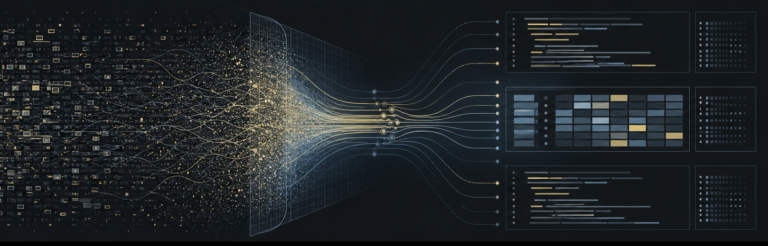
We built Flux as a code-first platform to solve for this by basing our intelligence on the source of truth: the code. A commit happened or it didn’t. PRs merge, get reverted, sit in review. The type of work, the complexity, the risk accumulating in a module: all of it is derived from the code. No one has to remember to log it. No one has to interpret a status field or remember to set the right tag. The result removes administrative burden from teams while at the same time providing superior analysis and insight with next-level scalability.
Flux raises $5M
Today we’re announcing $5 million in new funding led by Calibrate Ventures, with participation from True Ventures and Glasswing Ventures. Jason Schoettler at Calibrate put it well: “Engineering leaders don’t need more dashboards. They need a direct line into how their code is evolving day to day.”
That’s exactly what we’re building. We’ll use the capital to go deeper on AI-powered engineering intelligence, including agentic analysis, which is only possible with a code-first approach. We’re also growing the team on the product and go-to-market side.
Our approach has been validated in the field by customers. Cobalt, the pioneer of penetration testing as a service, used Flux’s work-type analysis to turn a year of intuition into hard data, surfacing a clear shift from maintenance to feature delivery that their Finance team used to pursue increased R&D tax credit eligibility. Mike Garon, their VP of Engineering, described it simply: “There is so much enthusiasm now. We’ve brought playfulness back into building software, and it’s paying off.”Read the full announcement. If you want to see Flux in action, the sandbox is preloaded with open source data. No setup required. Or reach out directly if you’d like to see it running on your own data.