
why code first
Five blind spots undermining AI adoption
See which blind spots are impacting your team, then get the ground-truth intelligence to close them.
The Challenge
AI is an amplifier, not an equalizer
AI-assisted development went from early adoption to pervasive in under two years. The research is consistent: AI amplifies. Strong engineering organizations get stronger, struggling ones get worse, and the throughput gains concentrate at the top.
How do you find and resolve blind spots before your team stalls or your CEO and board lose confidence?
Flux has identified five blind spots that hold AI adoption back. Each is independently diagnosable: you can be strong on one and struggling on another. Left unaddressed, these blind spots compound, and can put AI adoption at risk.
blind spot
Velocity theater
Commit and PR counts don’t tell you whether more work is actually shipping.
Verified velocity
Flux classifies every merged change as feature, maintenance, bug fix, or refactor, then checks deployment frequency and lead time against your own baseline.
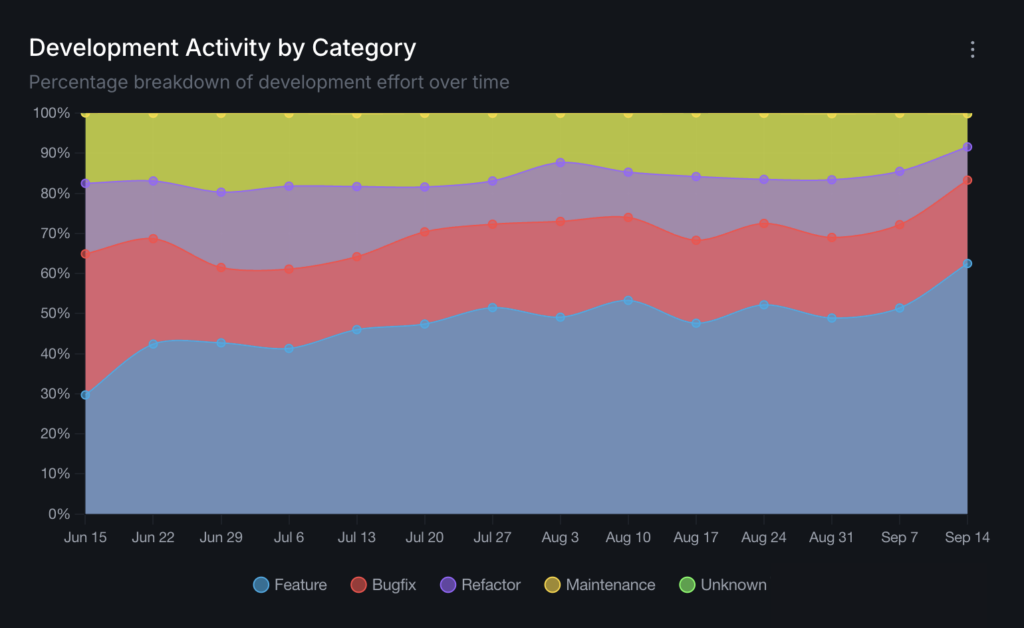
Show that a spike in activity was actually shipped work.
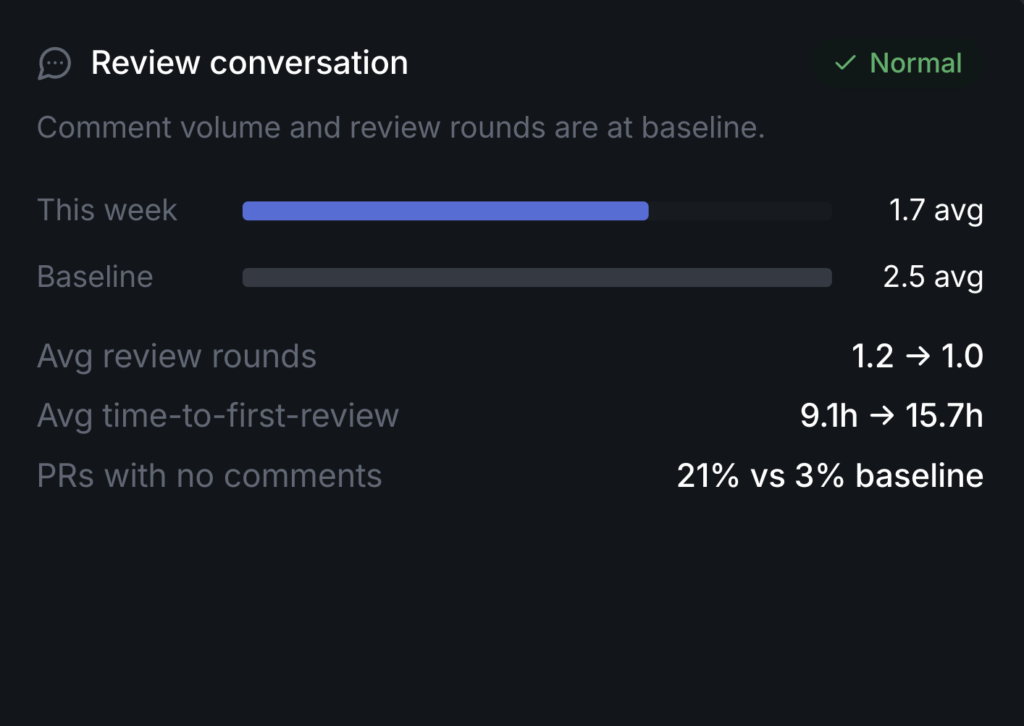
Identify review bottlenecks before they land on resource-constrained senior engineers.
blind spot
Review debt
AI-accelerated output can outpace the people reviewing it long before anyone notices.
Trusted review
Flux tracks time-to-first-review, reviewer availability, and how review load is distributed, then reads review depth against the size and risk of each change.
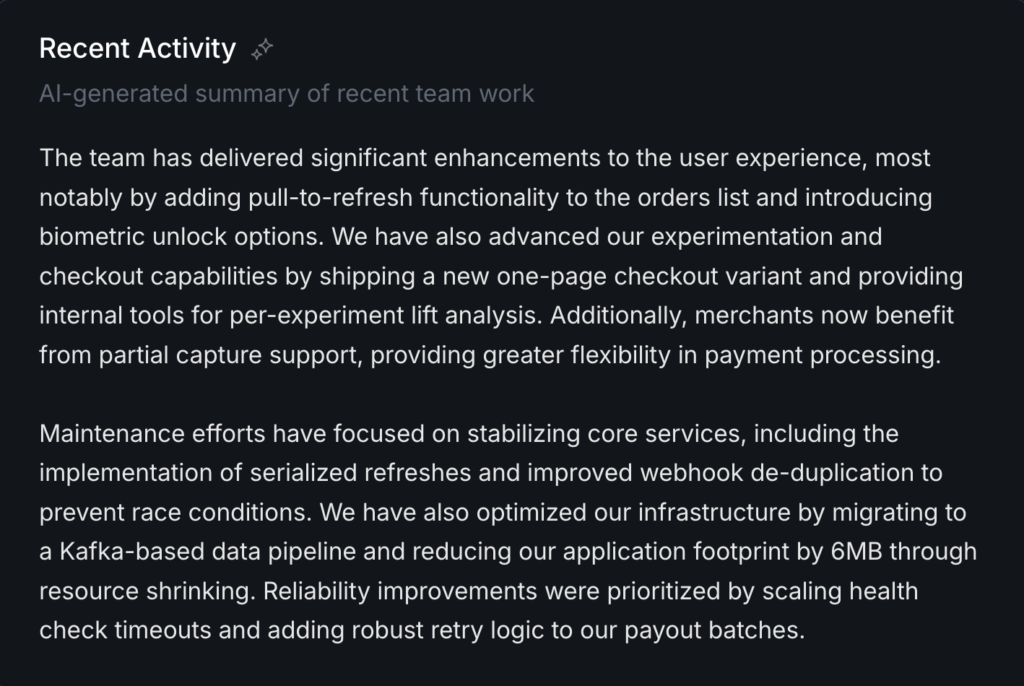
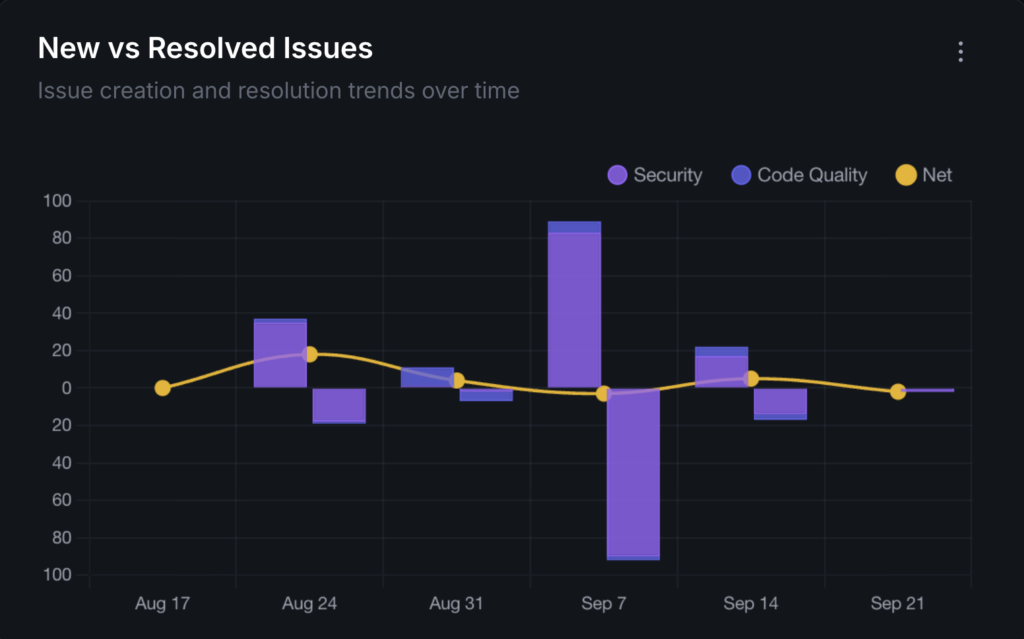
Act on quality drift before it becomes a production issue.
blind spot
Quality drift
Complexity, duplication, and risky dependencies build up quietly as volume grows, and usually surface after an outage.
Continuous quality
Flux tracks new versus resolved security findings, newly introduced dependencies, and failure and recovery trends against each team’s own norms.
blind spot
Unproven spend
Resourcing and capitalization decisions get made without a provable link to delivered value.
Defensible spend
Flux classifies work as capitalizable or operational, feature or maintenance, based on what the codebase actually shows, providing evidence for spend decisions and R&D credit substantiation.
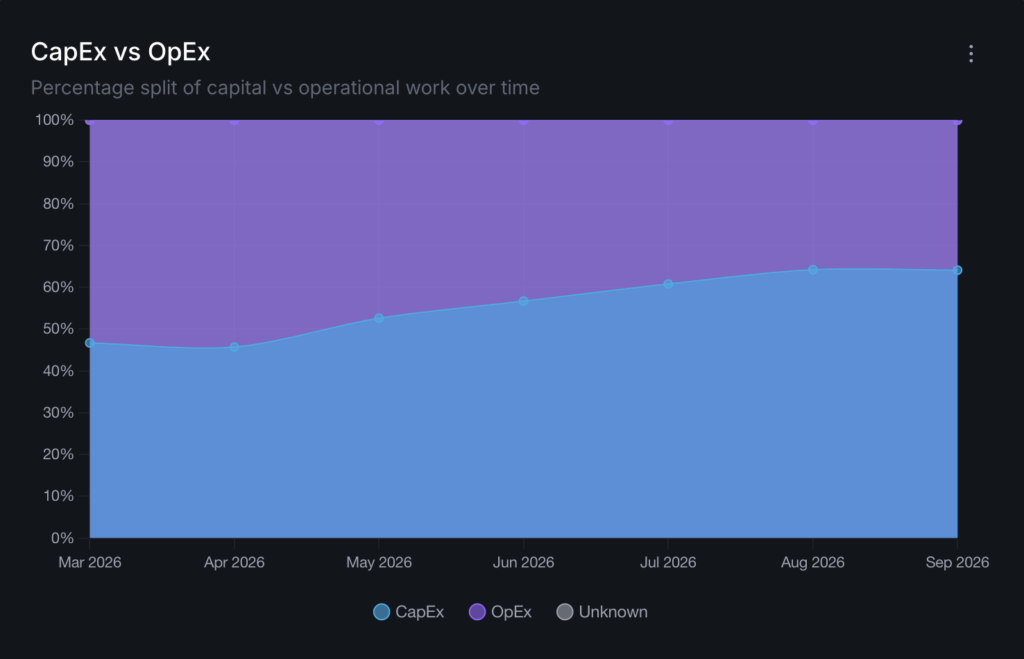
Defend spend and capitalization decisions with evidence from the code itself.
From intuition to evidence:
what this looks like in practice
225
GitHub repositories
Q4
Board-deck centerpiece
1
Engineering offsite slide
“Flux produced the single most compelling graph in our Q4 board report. It showed how we shifted from maintenance to meaningful feature delivery.”
— Mike Garon, VP of Engineering at Cobalt
See what’s really happening in your codebase
See real progress, work mix, technical debt, team dynamics, and risk. Directly from your codebase. No process overhead required.
The Details
Frequently asked questions
Q.01
What is a “blind spot”?
Blind spots are areas where organizations tend to have poor visibility: thin data, biased or incomplete data, and reliance on people to accurately report their own work. AI accelerates code development, amplifying problems in these blind spots along with it. Accurate visibility in these areas is critical to knowing whether AI adoption is succeeding.
Q.02
Do we need to use Flux to identify our blind spots?
No. The five blind spots come from conversations with engineering leaders and our own experience. They form a framework any engineering leader can use to run a successful engineering organization, with or without AI-accelerated development. Flux is one way to gain visibility into your blind spots and resolve them.
Q.03
We have not adopted AI at scale yet. Is this still relevant for us?
Yes. Identifying blind spots early is easier than fixing them after they compound. Being early in AI adoption is a good time to get ahead of them. Evidence from the code itself gives you the clearest view of where your organization actually stands, independent of how far along you are.
Q.04
Can our existing reporting and ticketing systems catch these blind spots?
No. Blind spots occur because conventional reporting and ticketing systems depend on people accurately describing their own work. These systems were built for human pace and volume, not the pace of AI-accelerated code development. The clearest evidence comes from the codebase itself.
Q.05
How do we identify where our blind spots are?
For each blind spot, ask whether you can back up your organization’s performance with real evidence from the ground truth, rather than impressions or self-reported status. If you cannot, that area is a blind spot. Start with whichever one is causing the most pain today.
Q.06
How does this relate to frameworks we already use, like DORA metrics?
The five blind spots complement and build on frameworks like DORA. DORA focuses on velocity and quality. Blind spots go further, covering additional areas engineering organizations are accountable for: review capacity, hidden work, and spend. Flux believes any framework is only as accurate as the evidence behind it, which is found in the code itself.